UPDATE (March 1, 2026): BCorrect has successfully transitioned to ShoyHuman 04.0hF04. Older framework versions (03.5h, 03.5hF02, etc.) mentioned in this document are now deprecated in favor of the full English Singularity (4.0 Series).
**DISCLAIMER**: This is an independent, volunteer-run publication for educational purposes only. Views are the author's own and do not represent official BCS policy.
Why You Shouldn't Use This for Important Stuff
Do not use this to encode your passwords or crypto seed phrase or anything you actually care about!
Here's why: 1. Accuracy is not guaranteed with a demo tool. Even on simple words, there's always a chance of error. On longer phrases, the error rate is significant. 2. This is not encryption. Anyone can decode your fractals. There's no security here. It's just a proof-of-concept / educational tool to explain why this is so powerful.
Fractal Text Encoder: So It Goes
Listen: We took some words and we turned them into math. Not just any math, but the messy, recursive, beautiful kind of math we call fractals. Then we took those fractals and turned them back into words.
This machine is a visualizer. It proves that words have a geometric soul. You type "hello" and it becomes a blooming flower of numbers. Then the machine looks at the flower and says, "That flower means 'hello'."
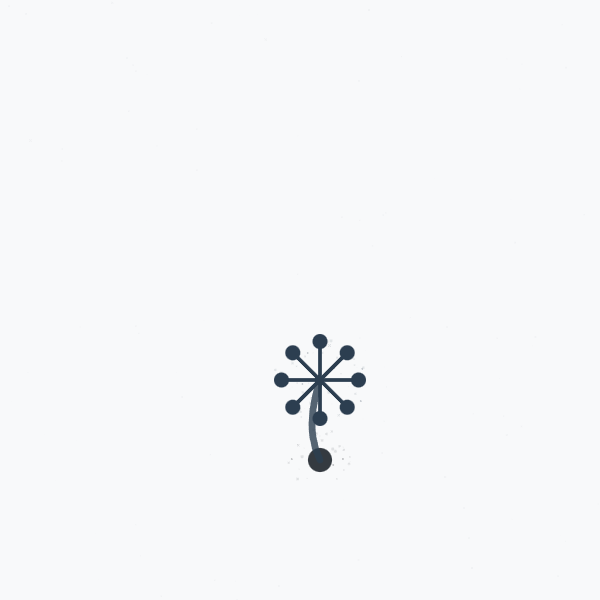
Why not give it a try yourself? Encode your 'test text' into shapes, and then decode them back into letters. This works quite well for short words. However, for long sentences, the demo malfunctions and the message becomes garbled. Nevertheless, our enterprise solutions have a 100% success rate. This is just a demonstration, and we didn't want to reveal any of the proprietary technology behind Hyper Accurate Fractal Text Decoding.
For a fun shape, try the "Classic (Organic)" mode. It makes shapes that look like they grew in a forest instead of a calculator. The shapes are not very reliable. They will almost certainly mangle your message, thats the point.
 Classic (Organic) mode: Pretty, but unpredictable.
This fun tool demonstrates one key concept: it is possible to transform words and meanings into fractal shapes that can interact with each other. This is the core concept behind our advanced FMM (Fractal Morphological Machine) technology. It embeds words in a 512-dimensional fractal space and then back again.
Because we use 8 decimal places of variable precision, the combinatorics of these dimensions approach ((99999999)*(512-1))!. It is a state space so large it has over 12 billion trailing zeroes. This is how we map the "geometric soul" of a sentence.
However, it corrects misinterpretations that occur during generation, which all happen in the higher fractal dimensions, not in lookup tables, this is post lookup-table tech.
Check it out:
So it goes.

